Ultima actualizacion: 9 de abril de 2026
Este Asado Te Va a Poner en Tu Lugar
Voy a ser honesto contigo: tu primer brisket probablemente será mediocre. Quizás el segundo también. El brisket es lo más difícil de ahumar bien, y cualquiera que te diga que su primer intento fue perfecto te está mintiendo o tuvo suerte. Llevo 15 años ahumando briskets y todavía tengo algún asado que no sale como había planeado.
Dicho esto, esta receta te da el marco que ha producido mis mejores briskets. Es el enfoque purista del centro de Texas — pimienta negra gruesa, sal kosher, humo de post oak y tiempo. Sin inyección, sin rub sofisticado con 14 ingredientes, sin humo líquido ni otros atajos. Solo carne y fuego.
Lo Que Puede Salir Mal (Y Saldrá)
- El Estancamiento: Alrededor de los 66-77°C internos, el enfriamiento evaporativo estancará tu temperatura durante 2-6 horas. No entres en pánico. No subas el calor. Espéralo o envuelve en papel de carnicero a los 74°C.
- Flat Seco: El flat (extremo magro) se seca antes de que el point (extremo graso) esté listo. Este es el fallo #1 del brisket. Solución: compra USDA Choice o Prime con buen marmoleo, no recortes la capa de grasa por debajo de 0,6 cm, y considera envolver una vez que la corteza se haya formado.
- Picos de Temperatura: Si tu ahumador sube a 149°C o más durante un periodo prolongado, la corteza se volverá amarga y el exterior se sobrecocinará antes de que el interior se haya rendido. Mantén la temperatura entre 107-135°C. La consistencia gana a la velocidad siempre.
- No Reposar Suficiente: Un brisket DEBE reposar mínimo 1 hora, idealmente 2-4 horas. Sáltate este paso y todo ese colágeno rendido se escapará al cortar. Tu tabla de cortar estará nadando en jugo que debería estar en la carne.
- Grado Incorrecto de Carne: El brisket grado Select tiene muy poco marmoleo. Quedará seco y duro hagas lo que hagas. Gasta los 4-5 €/kg extra por Choice como mínimo, Prime si lo encuentras.
Empieza temprano — hablo de las 4 o 5 de la mañana para un brisket que se sirva a la hora de cenar. Calcula 130-200 minutos por kilo a 121°C, más 2-4 horas de reposo. Un packer de 6,3 kg puede llevar 16-18 horas desde el fuego hasta la mesa. Este no es un asado que se pueda meter prisa.
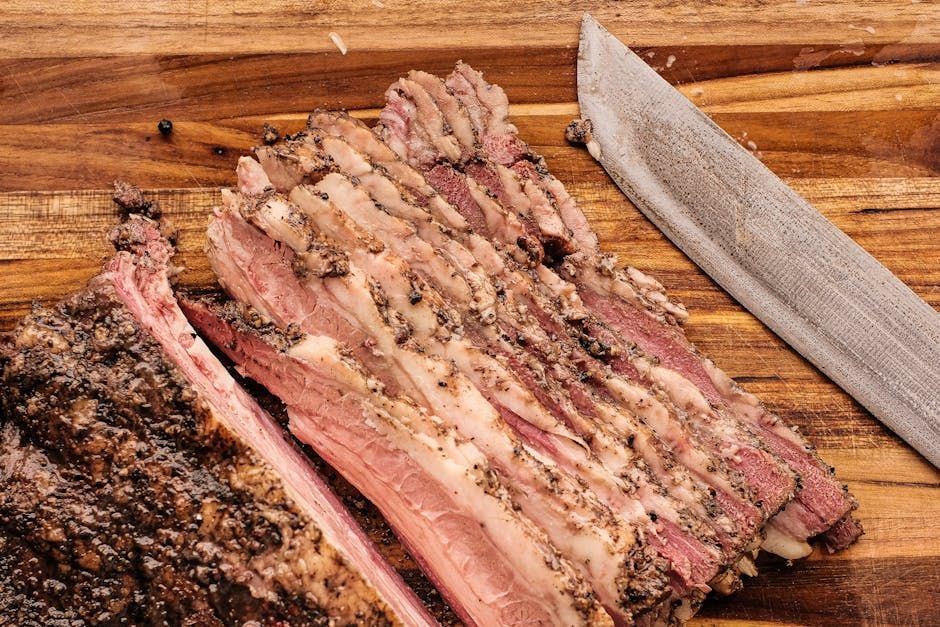
Brisket Ahumado Estilo Texas
Scan for full recipe
https://bbq-experience.com/es/recetas/texas-style-smoked-brisket
Ingredientes
- 14 lbs Whole packer brisket (USDA Choice or Prime)
- 0.5 cup Coarse black pepper (16-mesh)
- 0.3 cup Kosher salt (Diamond Crystal)
- 8 lbs Post oak wood splits or chunks
- 2 tbsp Yellow mustard (binder, optional)
- 4 oz Beef tallow (for wrapping, optional)
- 1 roll Butcher paper (pink, unwaxed)
Instrucciones
-
Remove brisket from packaging the night before and let it sit uncovered in the fridge overnight — this dries the surface and promotes better bark formation. The next morning, trim the fat cap to 1/4-inch (0.6 cm), no thinner. Remove the hard crescent of fat between the point and flat. Square off the thin edges of the flat — those wispy bits will burn to charcoal. Save the trimmings for grinding into burger meat.
-
Mix coarse 16-mesh black pepper and Diamond Crystal kosher salt at a 2:1 ratio by volume. If using mustard as a binder, apply a thin coat to all surfaces first — it burns off completely and just helps the rub stick. Apply the rub HEAVILY. When you think you have used enough, add more. The bark formation depends on a thick layer of seasoning. Let the brisket sit at room temp for 1 hour while you get the smoker going.
-
Fire up your smoker and stabilize at 250°F (121°C) using post oak as your primary wood. For an offset: build a coal bed from a full chimney of lump charcoal, then add post oak splits (forearm-sized) every 45-60 minutes. You want thin, blue smoke — NOT billowing white clouds. If you see thick white smoke, your fire is smoldering. Open the firebox damper and let it breathe. For a kamado: fill the firebox with lump charcoal and add 3-4 fist-sized oak chunks throughout.
-
Place the brisket fat-side down if your heat comes from below (offset, kamado), fat-side up if heat comes from above or behind (some cabinet smokers). The fat cap protects whichever side faces the heat source. Insert a leave-in probe into the thickest part of the flat, angled toward the center — avoid hitting fat pockets, which read lower than the surrounding meat. Close the lid and DO NOT OPEN IT for at least 3 hours. Every time you peek, you lose 15-20 minutes of recovery time.
-
Maintain 225-275°F (135°C) smoker temperature for the duration. Around hour 4-6, check the bark — you want a dark mahogany color and a surface that feels like dry leather when you press it. The internal temp will stall around 150-170°F (77°C). This is the stall — moisture evaporating from the surface cools the meat faster than the smoker heats it. It can last 2-6 hours. Do NOT increase your smoker temp. Wait it out, or proceed to the optional wrap at step 6.
-
Optional but recommended for beginners — the Texas Crutch: When internal temp hits 165°F (74°C) AND the bark is set (dark, dry, firm), wrap in pink (peach) butcher paper. NOT aluminum foil — foil traps steam and turns your bark to mush. If using beef tallow, drizzle 2-3 oz (88.7 ml) over the top before wrapping. The tallow bastes the meat and adds richness. Wrap snugly but not airtight — you want some breathability. Return to the smoker immediately.
-
The brisket is done when two conditions are met simultaneously: internal temperature of 200-205°F (96°C) AND the probe slides in with zero resistance — like pushing into room-temperature butter. Temperature alone is NOT sufficient. I have had briskets probe-tender at 197°F (92°C) and others that needed 208°F (98°C). The connective tissue renders at different rates depending on the specific animal. If it hits 203°F (95°C) but the probe still meets resistance, keep cooking.
-
Pull the brisket and rest it in a dry cooler (no ice) lined with old towels. Place the wrapped brisket inside, cover with more towels, and close the lid. MINIMUM rest: 1 hour. IDEAL rest: 2-4 hours. The internal temp will coast up a few degrees, then slowly drop. You can safely hold a brisket in a cooler for up to 6 hours without it dropping below serving temperature. This rest period is non-negotiable — it allows the rendered collagen to reabsorb into the meat fibers.
-
Unwrap and slice. The flat gets sliced against the grain in pencil-thick slices (about 1/4-inch (0.6 cm)). Each slice should hold together when picked up but pull apart with a gentle tug. If it falls apart, you overcooked it. If it does not bend, you undercooked it. Separate the point from the flat along the fat seam, rotate the point 90 degrees (the grain runs perpendicular to the flat), and slice against the point's grain. Serve immediately with white bread, dill pickles, white onion slices, and sauce on the side — not on the meat.
Recetas Relacionadas

Puntas Quemadas de Panceta de Cerdo Ahumada
Panceta de cerdo en cubos ahumada a baja temperatura, bañada en un glaseado pegajoso de azúcar moreno hasta caramelizar y volverse irresistible.
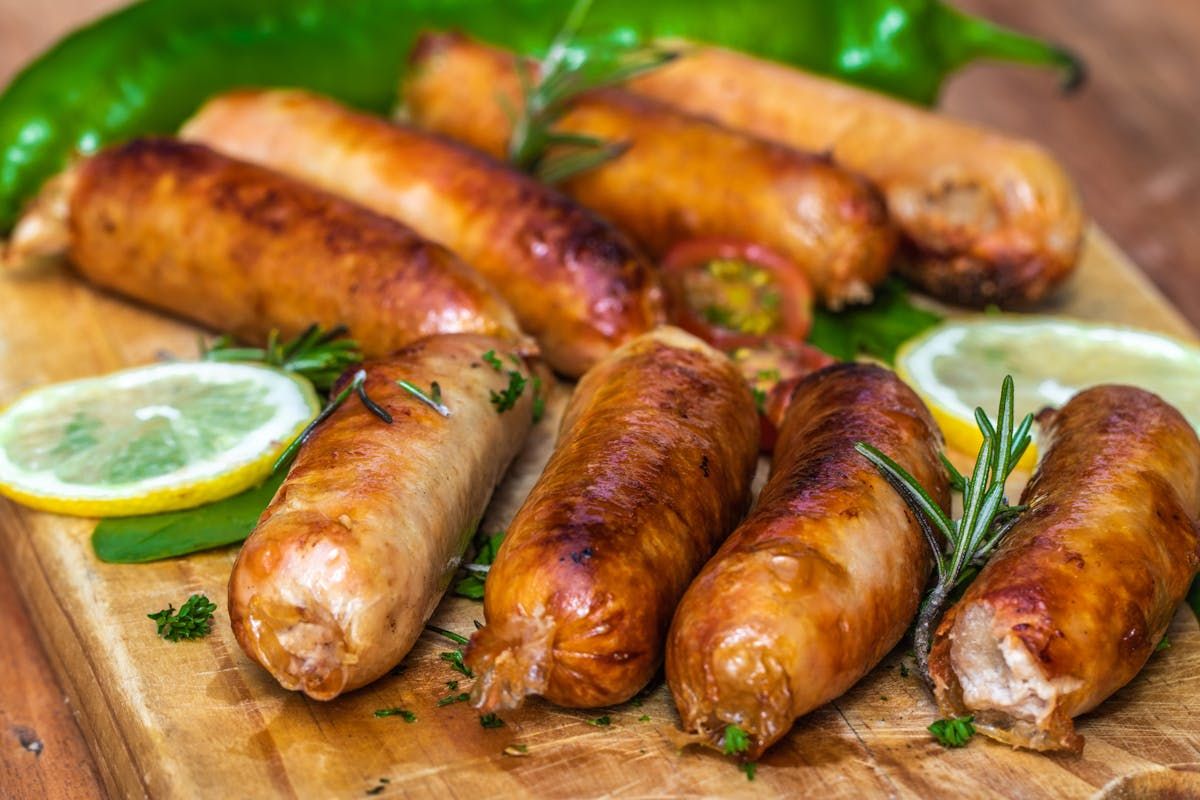
Texas Hot Links Sausage
Salchichas Texas hot link caseras, molidas gruesas, intensamente especiadas y ahumadas hasta que la tripa cruja con cada mordisco.
Mediterranean Pulled Lamb Shoulder
Paletilla de cordero ahumada low and slow con hierbas mediterráneas, deshilachada en tiras tiernas que explotan con sabores a romero, ajo y oliva.