How To Smoke Meat Without A Smoker
Last updated: April 11, 2026
You don't need a dedicated smoker to produce legitimate smoked meat. A standard charcoal grill, a gas grill, or even your kitchen oven can deliver real smoke flavor — if you understand the fundamentals of how to smoke meat without a smoker. The difference between success and a dried-out disaster comes down to controlling three variables: temperature, smoke production, and moisture. Get those right with the equipment you already own, and you'll turn out brisket, ribs, and pulled pork that'll make your neighbors think you dropped $2,000 on a pellet rig.
This guide covers every practical method, with specific temps, times, and wood recommendations. No fluff. No "it's easy!" promises. Just the techniques that actually work.
How To Smoke Meat Without A Smoker Using A Charcoal Grill
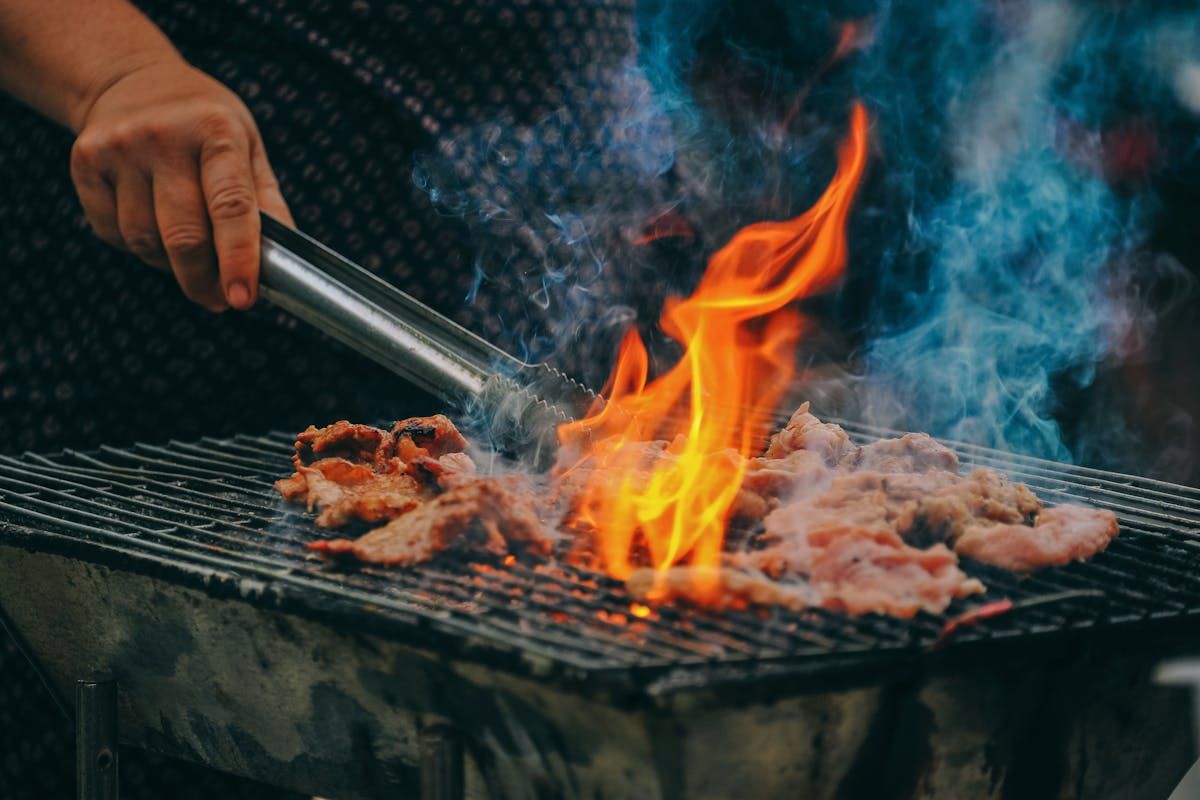
A charcoal kettle grill — like the classic Weber 22-inch — is the single best smoker substitute you can use. The indirect heat setup mimics an offset smoker surprisingly well.
The Two-Zone Setup
Bank all your lit charcoal on one side of the grill. The meat goes on the opposite side, over no coals at all. This is non-negotiable. If the meat sits directly over the heat source, you're grilling, not smoking.
- Charcoal amount: Start with about 25-30 briquettes (roughly half a chimney starter). You'll add 6-8 unlit briquettes every 45-60 minutes to maintain temperature.
- Target temperature: 225°F–250°F at the grate level. Use a probe thermometer clipped to the grate — the lid thermometer reads 30-50°F higher than actual cooking temp.
- Vent control: Bottom vent open about 25%. Top vent open 50%. Both on the same side as the meat, so smoke flows across the food before exiting. Close vents further to lower temp, open wider to raise it.
Adding Smoke
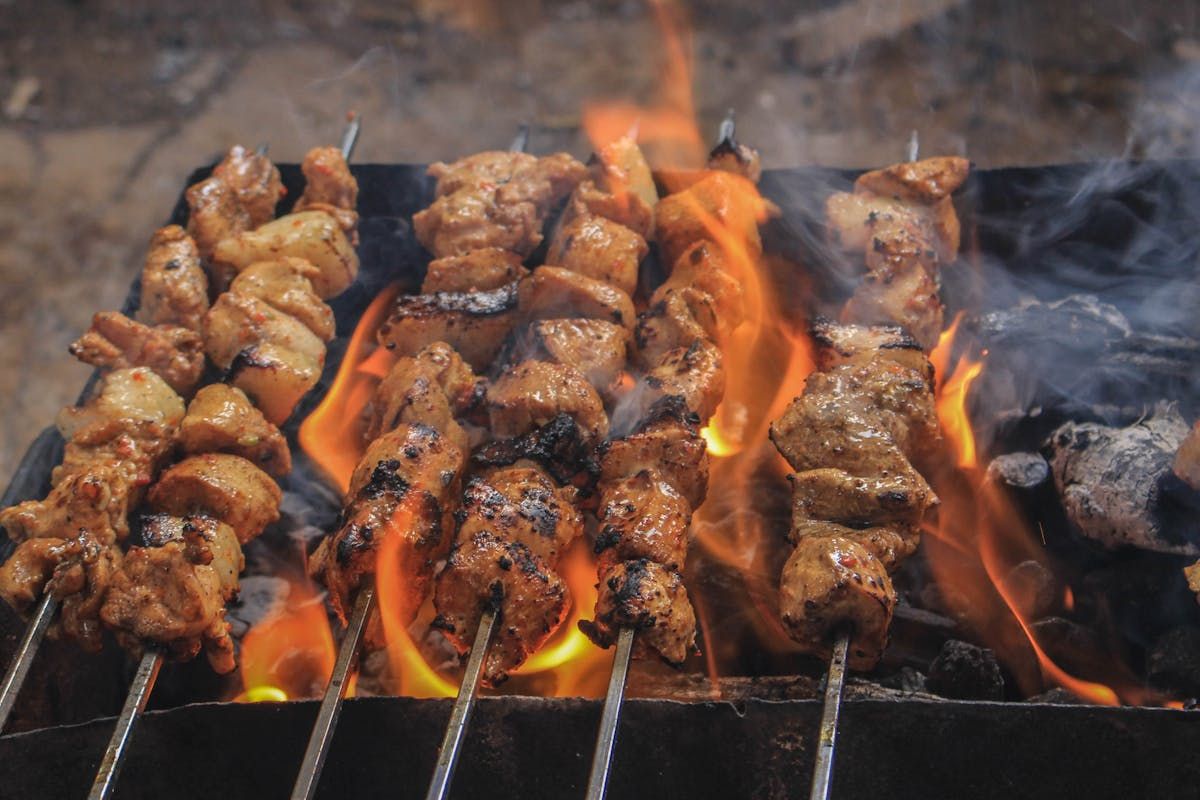
Place 2-3 fist-sized chunks of hardwood (not chips — they burn out in 15 minutes) directly on the lit charcoal. Oak and hickory are the most forgiving for beginners. You want thin, blue smoke. If you see thick white billows, your wood is smoldering, not burning cleanly — that produces bitter creosote flavor.
Actionable takeaway: Soak wood chunks for 30 minutes if you want them to last longer, but dry chunks produce cleaner smoke. Experiment with both. Either way, stop adding wood after the first 3 hours — meat stops absorbing smoke flavor once the surface sets (the bark formation).
The Gas Grill Method: How To Smoke Meat Without A Smoker On Propane
Gas grills are worse than charcoal for smoking. That's the honest truth. But they can still produce respectable results if you manage expectations and compensate for their weaknesses.
The Smoke Packet Technique
Gas grills don't burn solid fuel, so you need to create smoke artificially:
- Take a 12×12-inch sheet of heavy-duty aluminum foil
- Add 1.5-2 cups of wood chips (hickory, mesquite, apple, or cherry)
- Fold into a sealed packet and poke 6-8 holes in the top with a fork
- Place directly on the burner grate, under the cooking grate, on the lit side
You'll need 3-4 packets for a full cook. Each lasts about 45-60 minutes. Prepare them all in advance — you don't want to open the lid more than necessary.
Temperature Management on Gas
Most gas grills struggle to hold below 275°F. Here's what works:
- Light only one burner (the farthest from where the meat sits) on the lowest setting
- If your grill has 3+ burners, light only the far-left burner and place meat on the far right
- Place a disposable aluminum pan filled with 2 quarts of water between the heat source and the meat — this acts as a heat sink and keeps temps down
- Realistic target: 250°F–275°F. If you can't get below 275°F, accept it. You'll just cook faster and need to monitor internal temps more carefully
Actionable takeaway: A gas grill won't give you the same depth of smoke as charcoal. It'll get you maybe 60-70% of the way there. For your first attempt, choose a smaller cut like a 4-5 lb pork butt — it forgives temperature swings better than a full packer brisket.
Oven Smoking: The Indoor Method That Actually Works
Yes, you can smoke meat in a regular kitchen oven. No, it won't be the same as outdoor smoking. But combined with a quick stovetop smoke, you can produce pulled pork that's genuinely impressive.
The Stovetop-to-Oven Method
- Stovetop smoke phase (20-30 minutes): Line a roasting pan with foil. Scatter 1 cup of wood chips on the bottom. Set a wire rack over the chips. Place your seasoned meat on the rack. Cover tightly with foil. Set burner to medium-high until you see smoke escaping, then drop to low. 20-30 minutes gives enough initial smoke penetration.
- Oven low-and-slow phase: Transfer to a preheated 250°F oven. Add 1 cup of beef broth or apple juice to the bottom of the pan (not touching the meat). Cover tightly with foil. Cook until target internal temp is reached.
This method works exceptionally well for:
| Cut | Weight | Oven Temp | Time | Target Internal Temp |
|---|---|---|---|---|
| Pork butt | 5-7 lbs | 250°F | 8-10 hours | 203°F |
| Beef chuck roast | 3-4 lbs | 250°F | 5-6 hours | 205°F |
| Baby back ribs | 2-2.5 lbs | 275°F | 3-3.5 hours | 195°F–203°F |
| Chicken thighs | 6 oz each | 275°F | 2-2.5 hours | 175°F |
Actionable takeaway: Crack a window and turn on your range hood. The stovetop phase will smoke up your kitchen. It's manageable but not invisible. Don't attempt this if you have sensitive smoke detectors directly above the stove.
Liquid Smoke: When To Use It and When To Skip It
Liquid smoke gets a bad reputation in BBQ circles. Most of it is deserved — cheap brands taste like an ashtray. But quality liquid smoke (Wright's or Colgin hickory) is literally condensed real wood smoke. There's no artificial flavor involved.
Use it as a supplement, not a replacement:
- For oven-smoked meat: Add 1 teaspoon per lb of meat to your rub or inject it into the meat before cooking. This adds base smokiness that the stovetop phase alone can't fully deliver.
- For gas grill smoking: Brush a thin layer on the meat surface before applying your rub. 1/2 teaspoon per lb — less is more.
- Never use it as your only smoke source. Liquid smoke without any actual heat-and-wood smoking tastes flat and one-dimensional.
Actionable takeaway: If you're using more than 1 teaspoon per lb of meat, you've used too much. Liquid smoke should be undetectable as a distinct flavor — it should just make the existing smoke taste deeper.
Wood Selection: The Variable That Changes Everything
The wood you choose matters more than the method. A charcoal grill with the wrong wood will produce worse results than a gas grill with the right one.
| Wood | Intensity | Best For | Avoid With |
|---|---|---|---|
| Oak | Medium | Brisket, beef ribs, sausage | Nothing — it's the safest all-rounder |
| Hickory | Medium-strong | Pork shoulder, ribs, bacon | Fish, light poultry (overpowers easily) |
| Mesquite | Strong | Beef, game meats, short cooks | Anything over 4 hours (gets bitter) |
| Apple | Mild-sweet | Chicken, pork chops, turkey | Heavy beef cuts (too subtle) |
| Cherry | Mild-sweet | Ribs, chicken, duck | Nothing — adds beautiful mahogany color |
| Pecan | Medium-mild | Everything, especially pork | Nothing — another great all-rounder |
Actionable takeaway: If you're just starting, buy a bag of oak chunks and a bag of cherry chunks. Mix 70/30 oak to cherry. This combination works with every protein and produces a rich, slightly sweet smoke profile that's almost impossible to screw up.
Critical Temperature and Time Guidelines
Regardless of your method — charcoal grill, gas grill, or oven — these temperatures are non-negotiable for food safety and quality:
The Stall
Between 150°F–170°F internal temp, large cuts (brisket, pork butt) will stall. The internal temperature stops climbing for 2-4 hours while moisture evaporates from the surface. This is normal. Do not crank the heat. You have two options:
- Wait it out: Keep your cooker at 225°F–250°F and let physics do its thing. This produces the best bark.
- Wrap it (the Texas Crutch): At 165°F internal, wrap the meat tightly in butcher paper or heavy-duty foil. This pushes through the stall 1-2 hours faster but softens the bark. Butcher paper is the compromise — it breathes slightly and preserves more bark texture than foil.
Rest Period
After pulling the meat at target temp, rest it wrapped in a cooler (no ice) for a minimum of 1 hour. Large briskets benefit from 2-4 hours of rest. The internal temp will continue to rise 5-10°F during rest (carryover cooking), then slowly drop. A well-rested brisket at 145°F internal is more tender and juicier than one carved immediately at 203°F.
Actionable takeaway: Cook to temperature, never to time. An 8 lb pork butt might take 10 hours or 14 hours to hit 203°F — the meat doesn't know your schedule. When the probe slides in with zero resistance (the probe-tender test), it's done.
Common Mistakes That Ruin Smoker-Free Cooks
After years of fielding questions from people trying these methods, these are the errors that show up over and over:
- Opening the lid too often. Every time you lift the lid on a grill, you lose 50-75°F and add 15-20 minutes to your cook. Check the meat once per hour maximum. Use a wireless probe thermometer so you can monitor without opening.
- Using too much wood. Over-smoking is the #1 beginner mistake. The meat should taste like smoked meat, not like a campfire. 2-3 chunks for a full cook on charcoal. 3-4 foil packets on gas. That's it.
- Skipping the water pan. A water pan placed between the heat source and the meat serves two purposes: it stabilizes temperature swings and adds humidity that helps smoke adhere to the meat surface. Always use one.
- Not preheating. Get your grill or oven stable at target temp for at least 15-20 minutes before the meat goes on. Putting cold meat into an unstable environment means the first hour of your cook is wasted fighting temperature fluctuations.
- Cutting too soon. You just spent 8-12 hours cooking. Give it 60 minutes to rest. Cut it immediately and all those rendered juices pour out onto the cutting board instead of staying in the meat.
Conclusion
Smoking meat without a dedicated smoker isn't a compromise — it's a legitimate cooking method that thousands of pitmasters have used for decades before the pellet grill boom made everyone think they needed a $1,500 appliance. A charcoal kettle grill at $150 will produce better smoke than most cheap offset smokers at twice the price. A gas grill will get you 70% of the way there. Even your oven, with the stovetop smoke trick, can produce pulled pork that holds up against any food truck.
Start with a pork butt. It's cheap ($2-3/lb), forgiving, and feeds a crowd. Use the charcoal two-zone method if you have a kettle grill. Nail that one cook, and everything else — ribs, brisket, chicken — becomes a variation on the same principles: indirect heat, clean smoke, patience, and a thermometer you trust more than the clock.
FAQ
How long does it take to smoke meat on a regular grill?
It depends on the cut, not the equipment. A 5 lb pork butt takes 8-10 hours at 250°F regardless of whether it's in a smoker or on a charcoal grill set up for indirect heat. Baby back ribs run 3-3.5 hours at 275°F. A whole chicken (4-5 lbs) takes 2.5-3 hours at 275°F. The key variable is the internal temperature of the meat, not the time on the grill.
Can you get a real smoke ring without a smoker?
Yes — the smoke ring is a chemical reaction between nitric oxide (from wood combustion) and myoglobin in the meat. It happens in the first 2-3 hours of cooking when the meat surface is still below 140°F. A charcoal grill with wood chunks produces a smoke ring identical to a dedicated smoker. Gas grills with smoke packets produce a faint ring. Oven methods won't produce a visible ring, but adding 1/2 teaspoon of Morton Tender Quick to your rub can simulate the myoglobin reaction.
What's the best cut of meat to smoke for the first time without a smoker?
Pork butt (Boston butt), 5-7 lbs. It's the most forgiving cut in BBQ. High fat content (15-20%) means it's almost impossible to dry out. The target is 203°F internal — you can overshoot to 210°F and it'll still shred beautifully. It costs $2-3/lb, which means a failed experiment sets you back $15, not $80 like a brisket. Pull it at 203°F, rest for 1 hour, and shred with forks or bear claws.
Do wood chips or wood chunks work better for grill smoking?
Chunks, every time. Wood chips burn through in 10-15 minutes and produce an initial burst of thick, acrid smoke followed by nothing. Chunks (fist-sized, 3-4 oz each) smolder for 45-60 minutes and produce the thin blue smoke you want. The only exception is gas grills where you're making foil packets — chips work better there because they're enclosed and the smaller pieces ignite more reliably through the foil. For charcoal grills, use chunks placed directly on the coals.
Is it safe to smoke meat in a regular kitchen oven?
Yes, as long as you maintain proper temperatures and ventilation. Keep the oven at a minimum of 225°F — this keeps the meat in the safe zone (above 140°F within 4 hours per USDA guidelines). The stovetop smoke phase produces visible smoke for 20-30 minutes, so run your range hood on high and crack a window. Use a wired probe thermometer so you don't need to open the oven. The oven's built-in thermostat is actually more accurate than most grill thermometers, which makes temperature control easier, not harder.