Cold Smoking vs Hot Smoking: Complete Guide
Last updated: April 10, 2026
Cold smoking vs hot smoking — two fundamentally different processes that most beginners confuse, and that confusion leads to either mediocre food or, worse, a food safety disaster. Cold smoking preserves and flavors without cooking. Hot smoking cooks and smokes simultaneously. Understanding when to use each technique, and exactly how to execute them, separates the weekend warrior from the pitmaster who actually knows what's happening inside their smoker.
Cold Smoking vs Hot Smoking: The Core Difference
Here's the blunt truth: these two methods share the word "smoking" and almost nothing else.
Hot smoking operates between 225°F and 275°F. The food cooks through from ambient heat while absorbing smoke. A pork butt goes in raw at 40°F and comes out at 203°F internal — fully cooked, tender, and smoke-kissed. The entire process takes 8-16 hours depending on the cut.
Cold smoking keeps the chamber below 90°F — ideally between 68°F and 86°F. The food never cooks. It absorbs smoke flavor while remaining essentially raw (or previously cured). Cold-smoked salmon is still raw salmon. Cold-smoked cheese is still uncooked cheese. The smoke acts as a flavoring agent and, in the case of cured meats, a preservative.
| Parameter | Cold Smoking | Hot Smoking |
|---|---|---|
| Temperature | 68°F – 90°F | 225°F – 275°F |
| Duration | 4 hours – 4 days | 1 – 20 hours |
| Cooks the food? | No | Yes |
| Curing required? | Yes (for meat/fish) | Optional |
| Food safety risk | High if done incorrectly | Low |
| Smoke density | Light, sustained | Moderate to heavy |
| Shelf life extension | Significant (with curing) | Minimal |
Actionable takeaway: If you're new to smoking, start with hot smoking. It's forgiving, produces immediate results, and the food safety margin is wide. Cold smoking demands curing knowledge, temperature control, and a healthy respect for botulism.
How Hot Smoking Works: The Method Most Pitmasters Use
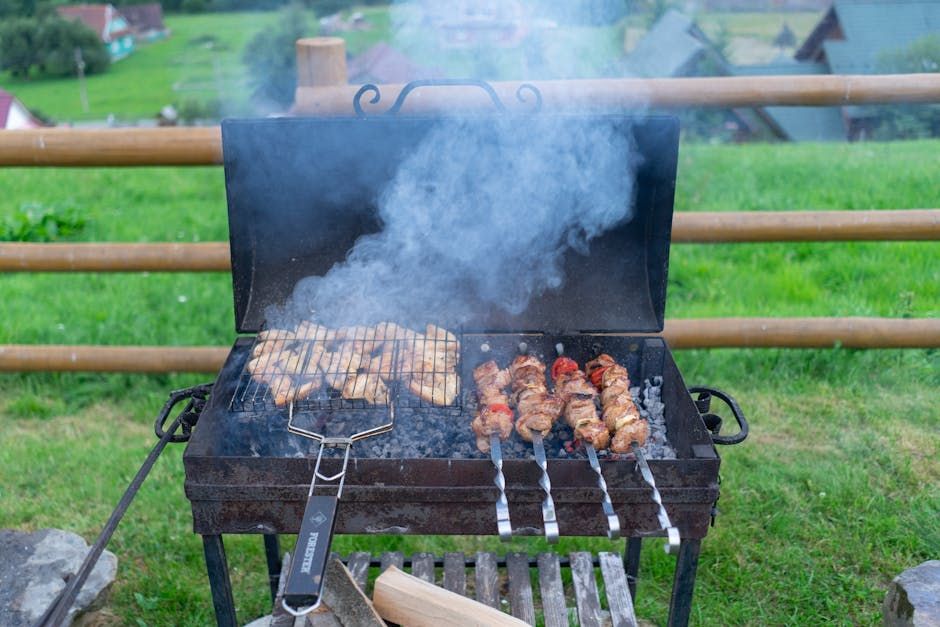
Hot smoking is the backbone of American barbecue. Every brisket, pulled pork, and rack of ribs you've ever eaten at a competition or a respected BBQ joint was hot smoked. The process is straightforward: generate smoke from smoldering hardwood, maintain a consistent temperature in the chamber, and let time do the work.
Equipment for Hot Smoking
- Offset smoker — the gold standard. Firebox is separate from the cooking chamber. Requires active fire management but delivers the cleanest smoke flavor. Expect to spend $800-$2,000 for a quality offset.
- Kamado (ceramic) — excellent heat retention, uses lump charcoal with wood chunks. Fuel-efficient. A 20 lb bag of lump lasts 3-4 long cooks.
- Pellet smoker — set-it-and-forget-it convenience. The trade-off is a milder smoke profile. Fine for beginners, limiting for advanced work.
- Kettle grill with snake method — budget option. Arrange 2 rows of briquettes in a C-shape, place wood chunks every 4-5 briquettes. Holds 250°F for 6+ hours on a 22" Weber.
Best Foods for Hot Smoking
- Pork butt (8-10 lbs) — 14-18 hours at 250°F to 203°F internal
- Beef brisket (12-14 lbs whole packer) — 12-18 hours at 250°F to 203°F internal
- Spare ribs (3-4 lbs per rack) — 5-6 hours at 250°F using the 3-2-1 method
- Whole chicken (4-5 lbs) — 3-4 hours at 275°F to 165°F internal
- Salmon fillets (6-8 oz each) — 2-3 hours at 225°F to 145°F internal
- Sausages — 2-3 hours at 225°F to 165°F internal
Actionable takeaway: Always cook to internal temperature, never to time alone. A 10 lb pork butt can take 12 hours one day and 18 hours the next. The stall — when the internal temp plateaus around 150-170°F — is real and unpredictable. Buy a quality dual-probe thermometer. It's the single most important tool you own.
How Cold Smoking Works: Flavor Without Heat
Cold smoking is an entirely different discipline. The goal is to expose food to smoke at temperatures low enough that the food doesn't cook — below 90°F, period. This means you need to generate smoke without generating significant heat, which requires either specialized equipment or a clever setup that separates the smoke source from the food.
The Curing Step You Cannot Skip
If you're cold smoking meat or fish, you must cure it first. There are no exceptions. At temperatures between 40°F and 140°F — the entire cold smoking range — pathogenic bacteria thrive. Curing with salt (and often sodium nitrite, known as Prague Powder #1) inhibits bacterial growth and creates an environment hostile to Clostridium botulinum.
For cold-smoked salmon, a standard cure is:
- 1 part kosher salt to 1 part brown sugar by weight
- Apply a 1/4-inch thick layer to the fillet (roughly 2 oz cure per 1 lb of fish)
- Refrigerate for 12-24 hours depending on thickness
- Rinse thoroughly, pat dry, and air-dry uncovered in the refrigerator for 12-24 hours until a tacky skin (pellicle) forms
The pellicle is critical. It's that glossy, slightly sticky surface that forms as proteins dry on the exterior. Smoke adheres to the pellicle. Without it, you get a bitter, uneven coating instead of that deep mahogany color.
Cold Smoking Equipment
- Smoke generator tube/maze — a perforated metal tube or maze filled with pellets or sawdust. Burns at extremely low temperatures for 4-8 hours. Costs $15-$30. This is the easiest entry point.
- External smoke generator — devices like the Smoke Daddy or A-MAZE-N cold smoke adapter that pipe smoke into your chamber via tubing. The separation ensures minimal heat transfer.
- Dedicated cold smoker — purpose-built cabinets. Expensive ($300-$1,000+) but offer the best temperature control.
- DIY: smoker + dryer duct — connect a small firebox to your cooking chamber with 6-8 feet of aluminum duct. Smoke cools as it travels through the duct. Ugly, effective, and nearly free.
Actionable takeaway: Start cold smoking with cheese or salt — both are zero-risk foods that don't require curing. Smoke 2 lbs of cheddar at 75°F for 2-4 hours, then vacuum-seal and refrigerate for 2 weeks before eating. The flavor mellows and deepens significantly during that rest period. If you eat it immediately, it'll taste acrid.
Cold Smoking vs Hot Smoking: Food Safety Compared
This is where the conversation gets serious. Hot smoking is inherently safe because the food passes through the danger zone (40°F-140°F) and reaches full cooking temperature. As long as you hit the USDA-recommended internal temperatures — 165°F for poultry, 145°F for fish, 145°F for whole cuts of pork/beef with a 3-minute rest — you're good.
Cold smoking is inherently dangerous if you don't know what you're doing. The food sits in the danger zone for the entire process. Without proper curing:
- Listeria monocytogenes can grow at refrigerator temperatures
- Clostridium botulinum produces toxins in anaerobic conditions (like inside a dense piece of meat)
- Salmonella thrives between 40°F and 140°F
This is not theoretical. Every year, improperly cold-smoked foods cause foodborne illness outbreaks. The cure is your defense. Prague Powder #1 (6.25% sodium nitrite) used at 1 teaspoon per 5 lbs of meat is the standard. It's not optional for cold-smoked meats — it's the only thing standing between you and a hospital visit.
Actionable takeaway: Never cold smoke meat or fish without a proper cure containing sodium nitrite. Non-meat items like cheese, nuts, butter, and salt can be cold smoked safely without curing. When in doubt, hot smoke it instead.
Wood Selection: Does It Matter Differently?
The wood you choose matters for both methods, but the impact differs significantly.
In hot smoking, you're dealing with chunks or splits that smolder at high temperatures. The smoke is a component of the flavor, but it's competing with Maillard reaction, bark formation, rendered fat, and the rub. You have room for stronger woods.
In cold smoking, smoke IS the primary flavor addition. There's no bark, no caramelization, no rendered fat to balance aggressive smoke. Lighter woods are essential, and over-smoking is the most common mistake.
| Wood | Hot Smoking | Cold Smoking |
|---|---|---|
| Hickory | Excellent for pork, beef | Too aggressive — use sparingly if at all |
| Oak | Versatile, medium intensity | Good choice — balanced and clean |
| Apple | Great for poultry, pork | Excellent — mild, slightly sweet |
| Cherry | Beautiful color, mild flavor | Excellent — subtle and fruity |
| Mesquite | Use cautiously — very strong | Avoid entirely — overwhelms food |
| Alder | Traditional for salmon | The gold standard for cold-smoked salmon |
| Beech | Mild, European tradition | Excellent — traditional for cold-smoked sausages |
Actionable takeaway: For cold smoking, stick to fruitwoods (apple, cherry) or alder. Use fine sawdust or small pellets — not chunks. Chunks burn too hot and defeat the purpose. For hot smoking, match wood intensity to meat intensity: hickory/oak for beef, fruitwoods for poultry and pork.
When to Use Each Method: A Practical Decision Framework
Stop overcomplicating this. Here's how to decide:
Use hot smoking when:
- You want to cook and smoke in one step
- You're working with raw meat that needs to reach safe internal temperature
- You want tender, fall-apart texture (collagen breakdown requires sustained heat)
- You're feeding people today — hot-smoked food is ready to eat immediately
- You're a beginner and want reliable, safe results
Use cold smoking when:
- You want to add smoke flavor without changing the food's texture
- You're making charcuterie — cold-smoked bacon, lox, bresaola
- You're smoking non-meat items: cheese, butter, salt, nuts, cocktail ingredients
- You're building a pantry of preserved, shelf-stable foods
- The ambient temperature outside is below 70°F (cold smoking in July in Texas is asking for trouble)
Actionable takeaway: If the ambient temperature exceeds 80°F, do not cold smoke. Period. You'll struggle to keep the chamber below 90°F and food safety collapses. Cold smoking is a fall/winter/early spring activity in most climates. Time your projects accordingly.
Common Mistakes That Ruin Both Methods
Hot Smoking Mistakes
- Dirty smoke — thick, white, billowing smoke means incomplete combustion. You want thin, blue smoke that's barely visible. Dirty smoke deposits creosote, which tastes like licking an ashtray. Solution: ensure adequate airflow and use seasoned wood with less than 20% moisture content.
- Opening the lid constantly — every time you open the chamber, you lose 50-75°F and add 15-30 minutes to the cook. Look once per hour maximum.
- Not resting the meat — a brisket pulled at 203°F needs a minimum 1-hour rest (2-4 hours in a cooler is better). The carryover cooking and juice redistribution is not optional. Cutting immediately means dry, disappointing meat.
Cold Smoking Mistakes
- Skipping the pellicle — rushing from cure to smoke results in bitter, blotchy flavor. That 12-24 hour drying period is mandatory.
- Over-smoking — cold-smoked cheese at 8+ hours becomes inedible. Start with 2 hours and taste. You can always add more smoke; you can never remove it.
- Ignoring temperature spikes — a smoke generator that flares can push chamber temp past 90°F quickly. Monitor continuously. A cheap wireless thermometer with alerts costs $25 and saves entire batches.
- No rest after smoking — freshly cold-smoked food tastes harsh. Vacuum seal and refrigerate for at least 1-2 weeks. The smoke compounds need time to equalize through the food.
Actionable takeaway: The #1 mistake across both methods is impatience. Rushing the fire in hot smoking gives you creosote. Rushing the cure in cold smoking gives you food poisoning. Rushing the rest in both gives you inferior flavor. Every shortcut costs you quality.
The Bottom Line
Cold smoking and hot smoking are complementary skills, not competing ones. Master hot smoking first — it's more forgiving, produces immediately satisfying results, and teaches you fire management fundamentals that transfer directly to cold smoking. Once you're comfortable maintaining clean smoke and consistent temperatures, expand into cold smoking with low-risk items like cheese and salt before tackling cured meats and fish.
The pitmaster who understands both methods has a dramatically wider range than one who knows only hot smoking. Cold-smoked butter on a hot-smoked brisket. Cold-smoked salt as a finishing touch on hot-smoked ribs. That's where the craft gets interesting.
Frequently Asked Questions
Can you cold smoke in a regular smoker?
Yes, but only with a separate cold smoke generator (tube, maze, or external unit). Your regular smoker becomes the chamber — you just don't light the main firebox. Place a smoke tube with pellets inside the unlit chamber. The tube generates smoke at roughly 70-80°F, well within cold smoking range. This works best when ambient temperature is below 65°F. Above that, the chamber can creep past 90°F even without a fire.
How long does cold-smoked food last compared to hot-smoked food?
Properly cured and cold-smoked salmon lasts 2-3 weeks refrigerated and 2-3 months frozen. Traditional cold-smoked, cured sausages (like some salamis) can last months at cool room temperature when the water activity is low enough. Hot-smoked food has the same shelf life as any cooked meat — 3-4 days refrigerated, 2-3 months frozen. The preservation advantage of cold smoking only applies when combined with proper curing and drying.
Is cold-smoked bacon raw?
Technically, yes. Cold-smoked bacon is cured but not cooked. This is actually how traditional European bacon is made — the smoking adds flavor and aids preservation, but you still need to cook it in the pan before eating. American commercial bacon is almost always hot-smoked or cooked during processing, which is why many people don't realize traditional bacon requires cooking. Always pan-fry, bake, or grill cold-smoked bacon to an internal temperature of 145°F before eating.
What's the minimum equipment needed to start cold smoking?
A 6-inch smoke tube ($15-$20), a bag of apple or oak pellets ($8 for 5 lbs), any enclosed chamber (even a large cardboard box works for cheese — seriously), and a thermometer. Total investment: under $40. Load the tube, light one end with a torch for 30 seconds, blow out the flame, and place it in the chamber with your cheese. It'll produce clean smoke for 4-5 hours. Upgrade to a proper setup after you've confirmed you enjoy the process.
Can you combine cold and hot smoking on the same food?
Absolutely — and this is an advanced technique worth exploring. Double-smoked bacon starts with a 12-hour cold smoke for deep flavor penetration, followed by hot smoking at 225°F to an internal temperature of 150°F. Pastrami traditionally gets a cold smoke after the cure and before the final steam/hot smoke. The cold phase builds smoke flavor at the molecular level, while the hot phase cooks and renders. Combined, you get complexity that neither method achieves alone. Allow 24-48 hours between the cold and hot phases for the cold smoke flavor to set.