Last updated: April 11, 2026
If your BBQ sauce recipe comes from the back of a ketchup bottle, you're leaving flavor on the table. A proper homemade sauce takes 30 minutes and destroys anything you'll find on a grocery store shelf. I've been tweaking this recipe for over a decade across hundreds of cooks, and what follows is the version that actually makes people shut up and eat.
The Ultimate BBQ Sauce Recipe: What Makes It Work
Most BBQ sauce recipes online are just ketchup with brown sugar. That's not sauce — that's candy. A real BBQ sauce recipe balances five elements: sweet, acid, heat, smoke, and umami. Miss one, and your sauce tastes flat. Overdo one, and it's a gimmick.
Here's the backbone ratio I work with for every batch:
| Element | Source | Target % |
|---|---|---|
| Sweet | Brown sugar, molasses | 25-30% |
| Acid | Apple cider vinegar, mustard | 15-20% |
| Tomato base | Tomato paste (not ketchup) | 30-35% |
| Heat | Cayenne, chipotle | 5-8% |
| Umami | Worcestershire, soy sauce | 5-10% |
Starting from tomato paste instead of ketchup gives you full control over sweetness and acidity. Ketchup already has corn syrup and vinegar baked in, so you're building on someone else's foundation — and it's a shaky one.
Ingredients: The Full BBQ Sauce Recipe Breakdown
This yields approximately 3 cups (24 oz) of finished sauce. Enough for 8-10 lbs of meat.
Base
- 6 oz tomato paste (one standard can)
- 1 cup water
- ½ cup apple cider vinegar (5% acidity — check the label)
Sweet
- ⅓ cup dark brown sugar, packed
- 2 tbsp blackstrap molasses
- 1 tbsp honey
Savory & Umami
- 2 tbsp Worcestershire sauce
- 1 tbsp soy sauce (or tamari for gluten-free)
- 2 tsp Dijon mustard
- 1 tsp fish sauce (optional, but it's not optional)
Heat & Spice
- 1 tsp cayenne pepper
- 1 tsp smoked paprika
- 1 tsp chipotle powder (or 1 canned chipotle in adobo, minced)
- 1 tsp garlic powder
- 1 tsp onion powder
- ½ tsp black pepper, freshly ground
- ½ tsp kosher salt
Optional Additions
- 2 tbsp bourbon (adds depth, alcohol cooks off)
- 1 tsp liquid smoke (only if you're not cooking on a smoker)
- 1 tbsp butter, stirred in at the end (Kansas City style richness)
Actionable tip: Measure your spices into a single bowl before you start cooking. Once the sauce is on heat, things move fast and you don't want to be fumbling with jars.
Step-by-Step Method: How to Cook It Right
Total time: 30-40 minutes. Active time: 10 minutes. The rest is simmering.
Step 1: Combine tomato paste, water, and apple cider vinegar in a medium saucepan over medium heat (around 300°F on an infrared thermometer aimed at the pan bottom). Whisk until the paste fully dissolves. Lumpy sauce is amateur sauce.
Step 2: Add brown sugar, molasses, and honey. Stir constantly for 2 minutes until the sugar dissolves completely. You'll feel the resistance in the whisk drop when it's done.
Step 3: Add Worcestershire, soy sauce, Dijon mustard, and fish sauce. Stir to combine.
Step 4: Add all dry spices — cayenne, smoked paprika, chipotle, garlic powder, onion powder, black pepper, and salt. Whisk for 30 seconds.
Step 5: Bring to a gentle simmer (you want lazy bubbles, not a rolling boil). Reduce heat to low, around 200-210°F surface temperature. Simmer uncovered for 20-25 minutes, stirring every 5 minutes.
Step 6: The sauce is done when it coats the back of a spoon and a finger-drag leaves a clean line that doesn't fill back in for 3 seconds. If it's too thick, add water 1 tablespoon at a time. Too thin, simmer another 5 minutes.
Step 7: If using bourbon, add it in the last 5 minutes of simmering. If using butter, kill the heat and stir it in off-burner.
Actionable tip: Taste the sauce at step 6 and adjust. Too sweet? Add 1 tbsp more vinegar. Too acidic? Add 1 tbsp brown sugar. Too flat? Add ½ tsp more salt. Sauce is a living thing — follow your palate, not the recipe blindly.
Regional Variations: Adapt the Base to Any Style
The recipe above is a Kansas City-influenced all-purpose sauce. Here's how to pivot it for different regional styles with minimal changes:
Carolina Vinegar Style
Double the apple cider vinegar to 1 cup. Cut the brown sugar to 2 tbsp. Add 1 tbsp red pepper flakes. Skip the molasses and tomato paste entirely — replace with ½ cup yellow mustard for a South Carolina variant. This is a thin sauce, meant to soak into pulled pork, not coat ribs.
Texas Style
Add 2 tbsp chili powder and 1 tbsp cumin. Replace honey with 2 tbsp beef broth. Increase black pepper to 1 tsp. Texas sauce is thinner, more peppery, and leans savory. It's meant for brisket, so don't make it sweet — the beef is the star.
Alabama White Sauce
Completely different animal. Replace the entire base with: 1 cup mayonnaise, ⅓ cup apple cider vinegar, 2 tbsp lemon juice, 1 tbsp prepared horseradish, 1 tsp black pepper, 1 tsp salt, ½ tsp cayenne. No cooking required — just whisk and chill for 2 hours. Killer on smoked chicken.
Memphis Style
Reduce brown sugar to 3 tbsp. Add 2 tbsp yellow mustard. Increase the vinegar by 2 tbsp. Memphis leans tangy with less sweetness than Kansas City. The sauce should complement dry-rubbed ribs, not fight them.
Actionable tip: Pick your sauce based on the meat, not your preference. Pork shoulder wants acid (Carolina). Brisket wants pepper and savory (Texas). Chicken handles sweetness (KC). Matching sauce to protein is non-negotiable.
Common Mistakes That Ruin Homemade BBQ Sauce
I've watched people mess this up in the same ways for years. Here's what to avoid:
- Using ketchup as a base. Ketchup is a finished product. You can't properly control sweetness or acidity when you start with it. Tomato paste + vinegar + sugar gives you full control for roughly the same cost.
- Adding liquid smoke to everything. If you're applying this sauce to smoked meat, the smoke is already there. Liquid smoke on top of real smoke tastes like a chemical spill. Only use it if you're cooking in an oven or on a gas grill.
- Boiling instead of simmering. A hard boil breaks down the sugars too fast, creating a bitter edge. Keep it at 200-210°F. Lazy bubbles. Patience.
- Not tasting before bottling. Your palate is your best tool. I adjust acid and salt on every single batch because ingredient quality varies — molasses brands differ, vinegar acidity changes, even the water in your tap matters.
- Saucing too early on the grill. Sugar burns above 265°F. If you glaze ribs or chicken with sauce and then cook over direct heat, you'll get a black, bitter char instead of a glossy finish. Apply sauce in the last 10-15 minutes of cooking only, or after pulling the meat off heat.
- Skipping the rest period. Fresh sauce is harsh. After cooking, let it cool to room temperature, then refrigerate for at least 12-24 hours. The flavors meld and mellow. Day-two sauce is always better than day-one sauce.
Actionable tip: Make your sauce the day before you plan to use it. Seriously. The overnight rest in the fridge transforms it.
How to Store and Use Your BBQ Sauce
Storage
Transfer to clean glass jars (mason jars work perfectly). Refrigerated, this sauce keeps for 3-4 weeks without any issues. The vinegar and sugar act as natural preservatives. For longer storage, freeze in ice cube trays — each cube is roughly 1 oz, perfect for portioning.
Application Guide
| Meat | When to Apply | Method | Internal Temp at Application |
|---|---|---|---|
| Pork ribs | Last 30 min of cook | Brush 2-3 thin coats, 10 min apart | 185-190°F |
| Pulled pork | After pulling | Mix 4 oz sauce per 1 lb meat | N/A (already rested) |
| Chicken (whole) | Last 15 min | Brush one coat | 155-160°F |
| Chicken wings | After cooking | Toss in bowl with 2 oz per 1 lb | N/A |
| Brisket | Serving only | Drizzle on the side, never on the bark | N/A |
| Burgers | After flipping | Brush top of patty once | 145°F+ |
Actionable tip: Never pour cold sauce directly onto hot meat on the grill. Warm the sauce to around 140°F first in a small saucepan. Cold sauce drops the surface temperature of your meat and prevents proper glaze formation.
Scaling Up for Competition or Large Cooks
The recipe above scales linearly. For a competition or event serving 50+ people, multiply everything by 4 for roughly 12 cups (96 oz) of sauce. A few adjustments for large batches:
- Use a heavy-bottomed stockpot to prevent scorching — more volume means more heat concentration at the bottom.
- Extend the simmer to 35-40 minutes for larger volumes. More liquid needs more time to reduce properly.
- Stir every 3 minutes instead of 5. Larger batches scorch faster because of the increased thermal mass at the bottom of the pot.
- If making more than 1 gallon, consider using an immersion blender at the end for a perfectly smooth consistency. Small batches don't need this, but large ones develop texture inconsistencies.
For competition use, I add 2 tbsp of apple jelly per batch — it gives the sauce a gloss that catches judges' eyes and adds a subtle fruit note. This is a competition trick, not something I'd do for backyard cooks where substance matters more than appearance.
Actionable tip: Make your competition sauce at least 48 hours ahead. Two days of melding in the fridge gives a noticeably more cohesive flavor than 24 hours.
Conclusion
A solid homemade BBQ sauce isn't complicated — it's 30 minutes of work plus an overnight rest in the fridge. The difference between a great sauce and a mediocre one comes down to using tomato paste instead of ketchup, balancing your five flavor elements, and having the discipline to taste and adjust before you bottle. Make it once from scratch, and you'll never buy the bottled stuff again. The ingredients cost about $4-5 per batch, and each batch covers 8-10 lbs of meat. That's better quality at a third of the price of any premium bottle on the shelf.
Frequently Asked Questions
How long does homemade BBQ sauce last in the fridge?
Properly stored in a clean glass jar, 3-4 weeks in the refrigerator. The high sugar content (approximately 25-30% of the recipe) and the acidity from the vinegar (pH around 3.5-4.0) create an environment that inhibits bacterial growth. If you see any mold, discard the entire batch — don't scrape and reuse. For storage beyond a month, freeze in 4 oz portions. Frozen sauce keeps for 6 months with no noticeable quality loss after thawing.
Can I use this BBQ sauce recipe as a marinade?
Not as-is. The sugar content is too high — it'll burn before the meat cooks through if you marinate and then grill. Instead, thin the sauce with equal parts apple cider vinegar (1:1 ratio) to create a marinade version. Marinate chicken for 2-4 hours, pork for 4-8 hours. Never marinate beef brisket — the acid breaks down the surface texture. For brisket, this sauce belongs on the side at serving time, period.
What's the best BBQ sauce for ribs?
For pork spare ribs (3-3.5 lb rack), the Kansas City-style base recipe above is ideal — the sweetness caramelizes during the last 30 minutes at 250-275°F smoker temp. For baby back ribs (1.5-2 lb rack), cut the brown sugar by 2 tbsp and add 1 tbsp more vinegar because baby backs are already sweeter and more tender than spares. Apply in thin coats — three passes with a silicone brush, 10 minutes apart, during the final phase of cooking.
How do I make BBQ sauce less sweet?
Increase the acid: add apple cider vinegar 1 tablespoon at a time until the sweetness drops to where you want it. Alternatively, add 1 tsp of Dijon mustard — mustard cuts perceived sweetness without adding noticeable vinegar tang. If you want a savory-forward sauce, reduce brown sugar to 3 tbsp, skip the honey entirely, and add 1 tbsp of soy sauce. Also check your tomato paste — some brands (like Hunt's) add sugar. Use Cento or Mutti, which are tomatoes and salt only.
Can I make this BBQ sauce on the smoker?
Yes, and it's worth doing at least once. Pour the raw mixed ingredients (everything except butter) into a disposable aluminum pan. Place it on the smoker at 225-250°F for 45-60 minutes, stirring every 15 minutes. The sauce absorbs real smoke flavor that liquid smoke can't replicate. Use a mild wood — cherry or apple works best. Hickory or mesquite will overpower the sauce. This method takes longer but produces a sauce with legitimate smoke complexity. Just watch the edges of the pan — the sauce will reduce faster at the perimeter and can scorch if you're not stirring thoroughly.
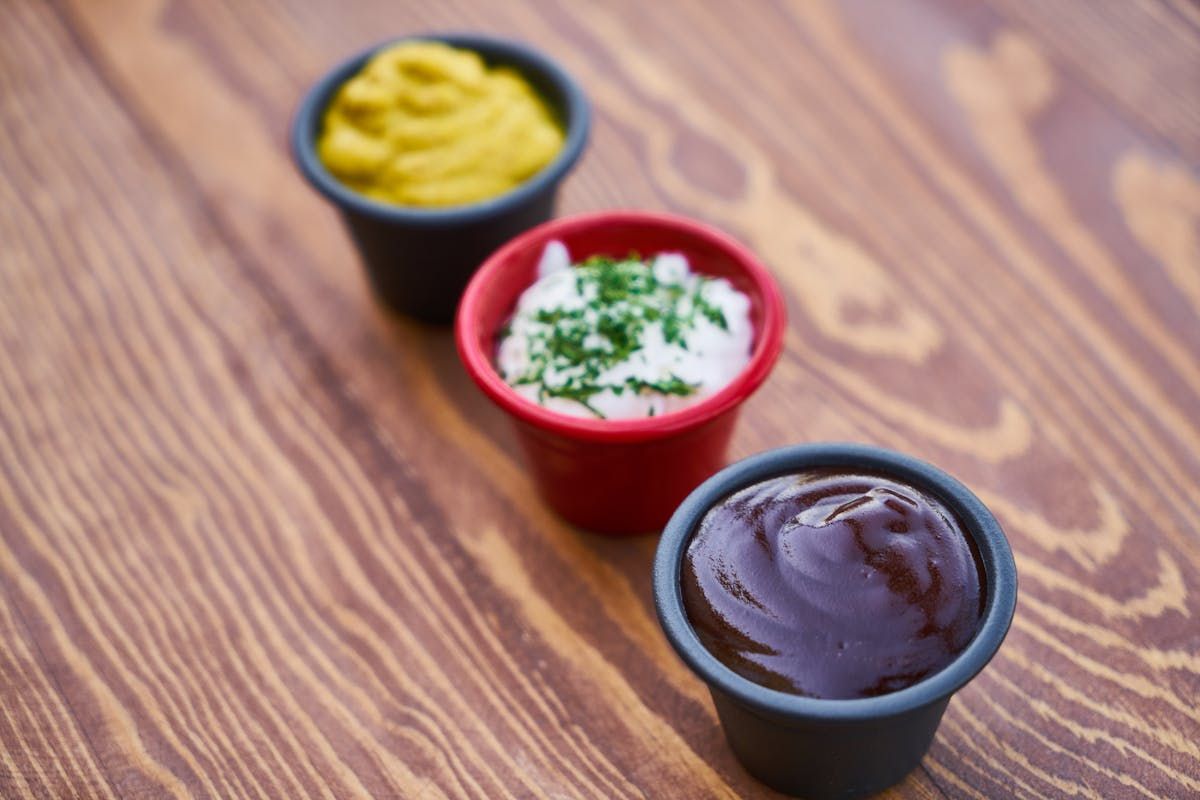
Bbq Sauce Recipe
Scan for full recipe
https://bbq-experience.com/en/recipes/bbq-sauce-recipe